
Running a Sex Offender Check in Clarendon County
The public starting point is the South Carolina Sex Offender Registry/SORT page maintained by the South Carolina Law Enforcement Division. SORT is free. It can be searched by a person's name or by geography, including Clarendon County, a city, an address, or a ZIP code. The public interface can switch between a map and a result list. That makes it useful for checking a known name as well as reviewing reported locations near a place that matters to a family.
The Clarendon County Sheriff's Office has local registration and enforcement duties, but the research found no stable county page with registration hours, a direct unit line, a local fee, or a separate county list. Call the Clarendon County Sheriff's Office before going to an office. Public searches belong in SORT. A suspected error or possible failure to comply belongs with SLED, while an emergency always belongs with 911.
The official SLED overview shows how the state describes its registry, removal routes, and lawful-use warning.
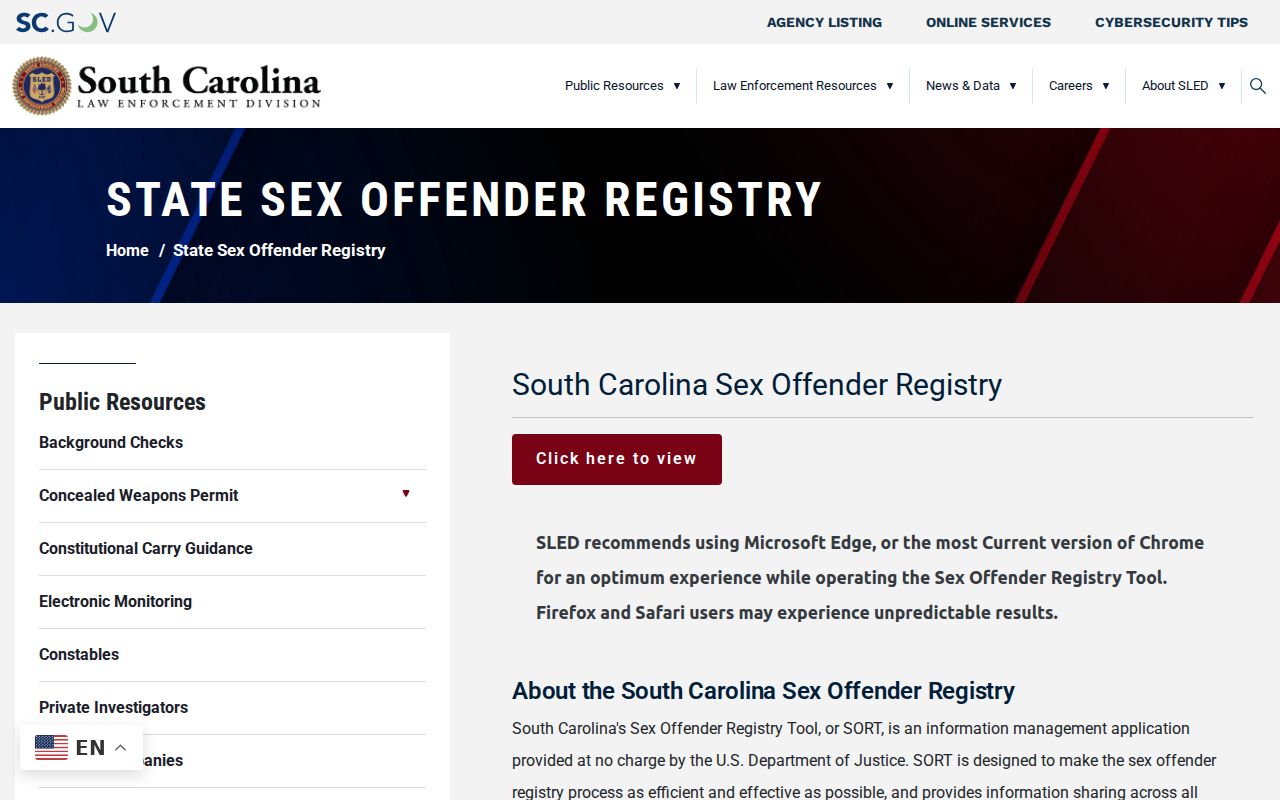
This source is the best place to confirm current South Carolina rules before relying on an older summary.
Clarendon County SORT Map Search
SORT uses a DOJ-provided public registry tool. Choose Clarendon in the county field for a county-wide view, or use Manning, Summerton, or Turbeville to narrow the place. An address search can help with a specific location, while a radius control can broaden the area around it. Exact radius options may change, so use the values shown on the live form. The map is a display of reported registry information. It should not be read as a measure of neighborhood crime or individual risk.
SLED notes a practical browser issue. Microsoft Edge or the latest Chrome is recommended, while Firefox and Safari can act unpredictably. If a Clarendon County location search fails, simplify the street entry, try a city or county filter, clear the form, and retry in a supported browser. A blank map may be a technical problem rather than proof that no record exists.
The captured South Carolina SORT search interface illustrates the public search route.
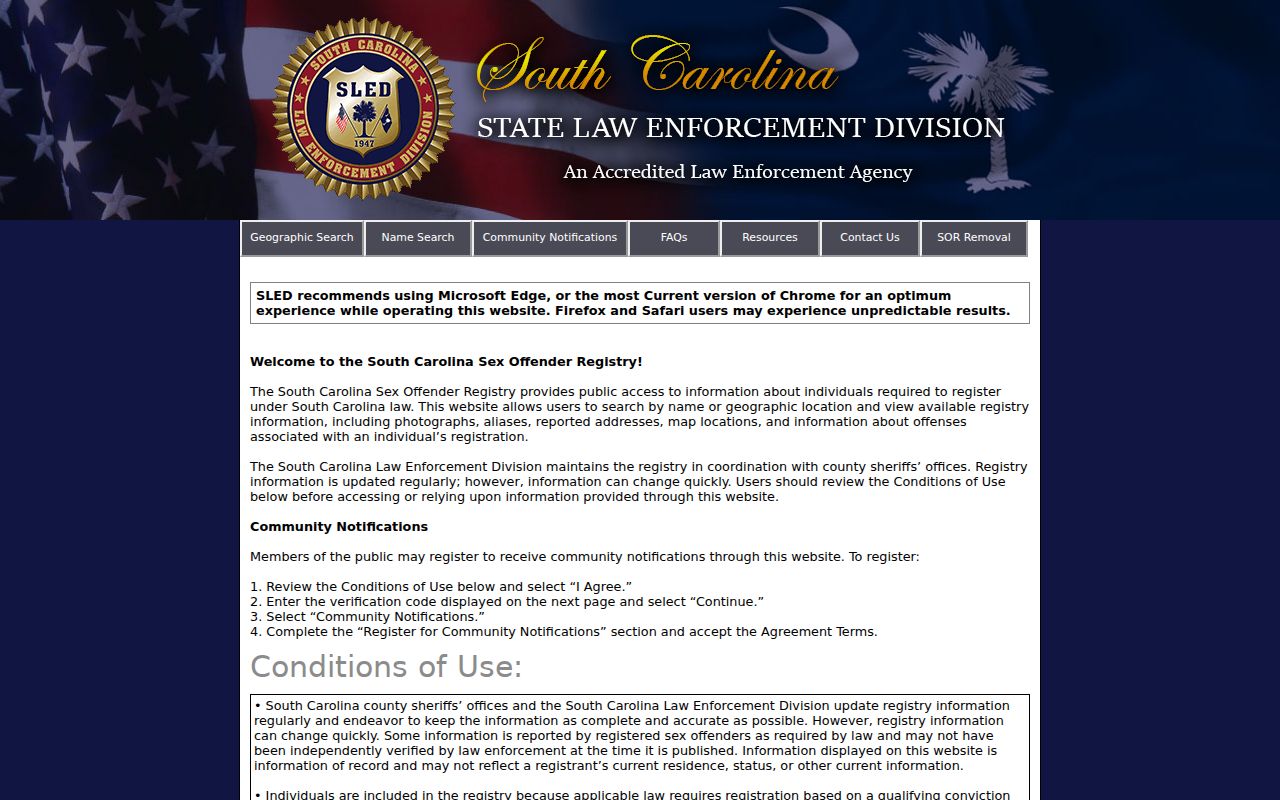
The live interface controls the current field labels and search options.
Searching the South Carolina Sex Offender Registry/SORT
Start with the least ambiguous information available. A full name helps with a known person, while a county or address works better for place-based awareness. Review every displayed identifier before concluding that a result refers to the intended person.
- Open SORT from SLED and read the conditions of use before beginning.
- Enter a last name and, when known, a first name, or choose a geographic route using Clarendon County, city, address, or ZIP.
- Review the list or map and compare aliases, photographs, and other identifiers instead of relying on a name alone.
- Open the full profile to read the conviction, reported location, tier, and compliance information, then note the agency contact for questions.
| Field Label | Type | Required | Notes |
|---|---|---|---|
| Last name | Text | Name route | Use with first name when available |
| First name | Text | Optional | Narrows name results |
| Address | Text | Geographic route | Search a street or location |
| City and state | Text or selection | Optional | Use a Clarendon County municipality and South Carolina |
| ZIP and county | Text or selection | Optional | Choose Clarendon to narrow results |
| Radius | Selection | Optional | Confirm offered mile values on the live form |
| Map or list | View control | No | Changes how results are displayed |
Clarendon County Registry Meaning
A listing is based on a qualifying conviction and South Carolina registration law. It does not state that the person now presents a certain level of danger, nor does it predict future conduct. Tier information concerns statutory registration and possible removal routes. It is not a simple public risk score. This distinction matters when reading a Clarendon County sex offender profile or viewing several markers on the map.
Addresses are reported registry information. They may change through the verification process, and they do not grant anyone permission to visit or confront a household. For personal and family safety, use the data as one source of awareness. SLED is the correction contact when a profile appears wrong. The registry office can be reached at 803-896-2601, by fax at 803-896-2311, or at sor@sled.sc.gov.
What a Registry Profile Shows
SORT profiles bring identity, location, conviction, and registration facts into one public record. No single field should stand alone. Compare the current and historical photographs, aliases, physical descriptors, and conviction information before treating a profile as a match.
| Name & Aliases | Current name and alternate names recorded by the registry |
|---|---|
| Photo & Description | Multiple photographs over time, physical traits, and identifying marks where collected |
| Registered Address | Mapped residence and other location information allowed for public display |
| Offense & Statute | Sex-related conviction, jurisdiction, description, statute, and conviction data |
| Level / Tier | The South Carolina tier applied under current law and guidance |
| Registration Status | Compliance or registration status shown by the public system |
| Other Data | Vehicle or other registration details when the public configuration exposes them |
Older photographs and aliases can explain why a recent name or image search seemed incomplete. Profile fields also show why a map marker alone is not enough.
Clarendon County and NSOPW
SORT is the South Carolina layer. The Dru Sjodin National Sex Offender Public Website searches participating public registries across jurisdictions. Use NSOPW when the known address, conviction, or past residence may fall outside South Carolina. SLED states that SORT feeds automatic updates to the national system, but each state still controls its own source record and public fields.
For a Clarendon County-only question, SORT offers the more direct county and local map filters. For a cross-state question, NSOPW avoids repeating separate searches in many state portals. If the systems differ, follow the source jurisdiction's link and contact its registry agency. Neither service replaces the other in every case.
The official national registry search entry shows the cross-jurisdiction starting point.
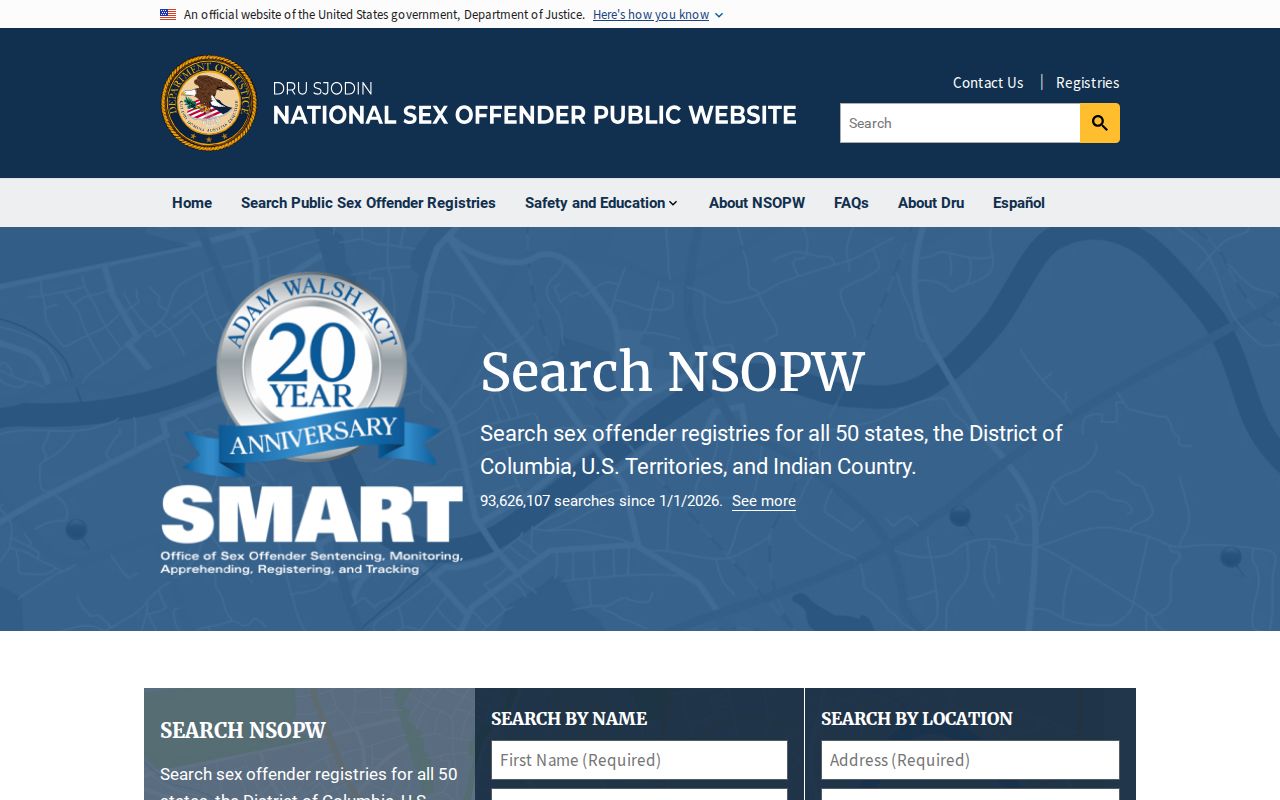
This broader search is most useful when a record trail crosses a state line.
Registration Requirements and Levels in South Carolina
South Carolina revised its former lifetime-only system through Act 221 in 2022, and legislation in 2025 changed Tier I offenses and related eligibility. The current SLED guidance must control. The table states the earliest removal route SLED describes, not an automatic end date. Every applicant must also meet the other legal conditions.
| Level / Tier | Earliest Removal Route | Decision Channel |
|---|---|---|
| Adult Tier I | After at least 15 years registered, or the qualifying period after discharge or active supervision ends | Administrative request to SLED |
| Adult Tier II | Corresponding 25-year threshold, subject to all conditions | Administrative request to SLED |
| Adult Tier III | After 30 years from discharge without supervision or the end of active supervision | Motion in General Sessions Court |
| Out-of-state or federal | Equivalent federal SORNA tier and South Carolina route, sometimes with home-jurisdiction eligibility | SLED guidance and statute |
Research did not verify a public Clarendon County schedule for in-person verification. A registrant should confirm duties directly with the sheriff and SLED rather than infer a check-in schedule from the tier table.
Clarendon County Registry Removal Routes
Removal from the registry is distinct from ordinary expungement of a criminal record. SLED's administrative process applies to qualifying Tier I and Tier II matters. Tier III removal requires a motion in General Sessions Court. The applicant must satisfy added conditions, including no failure-to-register conviction in the prior ten years and no added sexual offense after registry placement.
SLED requires a nonrefundable $250 filing fee paid by money order or cashier's check, sentencing or disposition papers for every registration conviction, and official proof that required treatment is complete. The South Carolina magistrate procedure and expungement chapter helps show why lower-court record relief is a separate legal track.
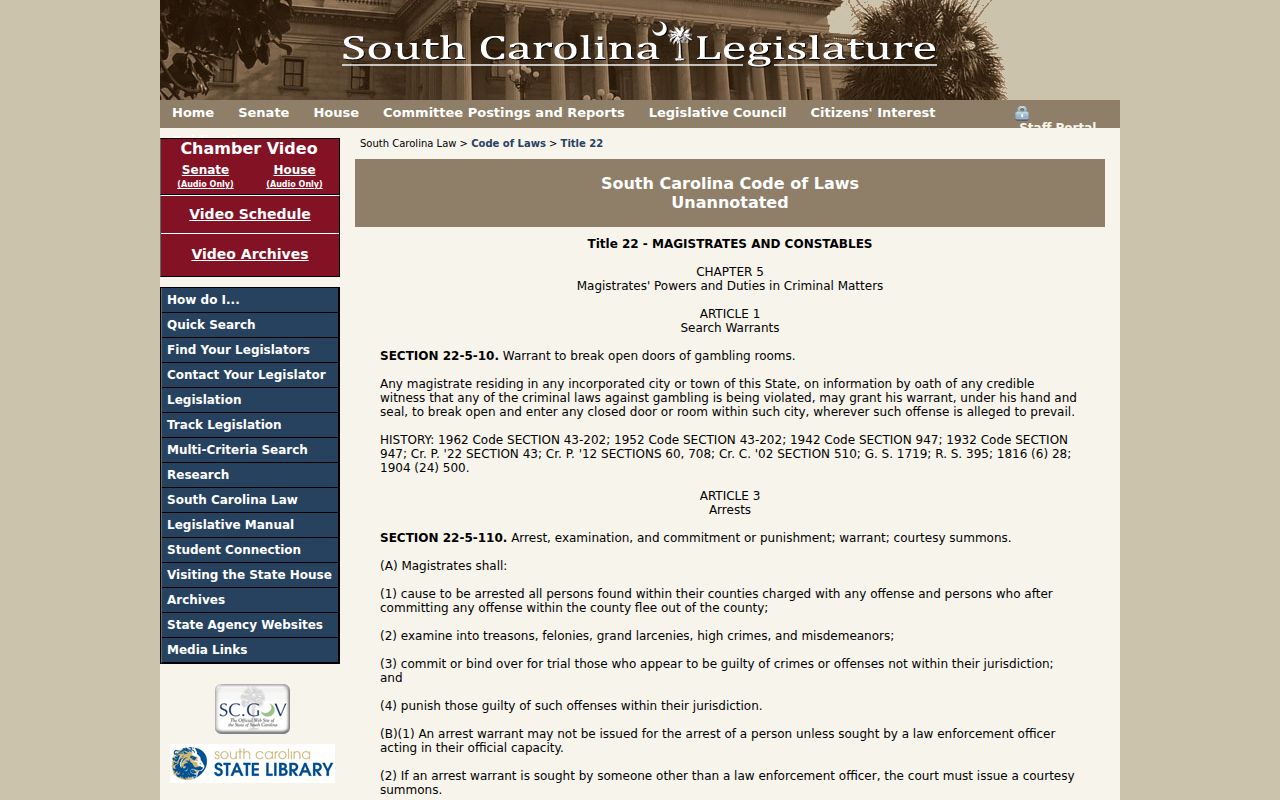
The different court and SLED routes make it vital to use the process tied to the actual record.
Correcting Clarendon County Registry Records
When a profile has a wrong address, photo, alias, conviction detail, or status, record the specific field and contact SLED. The registry office lists PO Box 21398, Columbia, SC 29210, along with 803-896-2601 and sor@sled.sc.gov. Provide enough detail for staff to identify the public profile, but do not send private data through an unsafe channel.
Suspected noncompliance also goes to SLED or the proper law-enforcement agency. Do not investigate at the reported address. A prompt threat or emergency requires 911. For a routine local registration question, first call the Clarendon County Sheriff's Office because no verified public appointment schedule was found. These routes keep correction and enforcement work with the offices authorized to act.
The official South Carolina offense classification chapter supplies the legal context for offense penalties.
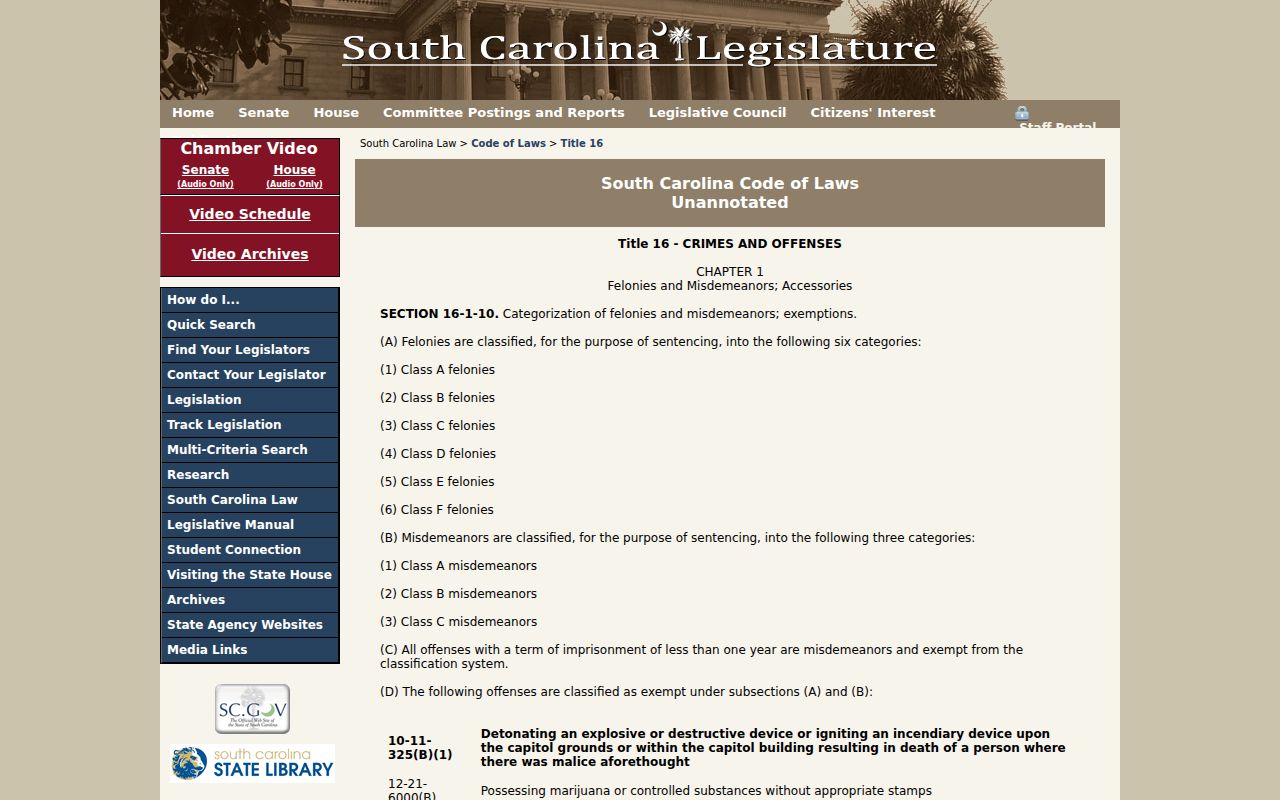
Always read a registry conviction with its cited offense law and recorded disposition.
Lawful Use and Community Notification
The Clarendon County sex offender registry supports public awareness, personal safety planning, and law-enforcement work. It does not authorize harassment, threats, discrimination, vigilantism, or an approach to a reported home. SLED warns that registry information must not be used to unlawfully injure, harass, or commit a crime against a registrant or anyone at the address.
Misuse can increase criminal punishment: S.C. Code §23-3-510 permits up to $1,000 more in a misdemeanor fine and up to six added months, or up to five added years for a felony, when registry data is used to commit an offense.
Read a map result as a reported record, keep distance from the location, and give possible violations to law enforcement. Community awareness works best when facts are checked and the lawful limits are observed.