
How to Check Criminal History in Clarendon County
No one Clarendon County search contains every record. Begin with the South Carolina Judicial Branch Public Index for a filed court case, then compare that result with a SLED CATCH report when statewide fingerprint-supported history matters. Ask the arresting agency for its incident report. Contact the detention center for current booking or release information. The Clerk of Court supplies the filed General Sessions case and certified copies. This split matters because an arrest report, a booking entry, a court docket, and a state history describe different steps.
Gather a full legal name, date of birth when known, former names, likely city, and a rough date range. Public Index supports name, case number, action type, date, and status fields. CATCH uses a starts-with name search and can return several people. Compare identifiers and the final disposition before relying on a match. A name result alone does not prove identity.
- Choose the record: police report, booking status, court file, or statewide history.
- Search Public Index by name and narrow by Clarendon County, date, or case number.
- Use SLED CATCH for a paid South Carolina name-based criminal-history report.
- Call the responsible office when no online result appears or a recent event has not posted.
- Compare the court disposition with the state entry and request a certified copy when proof is needed.
Three Clarendon Criminal Record Systems
Clarendon County records live in three core systems. The Detention Center records custody. The Clerk of Court records prosecution. SLED compiles statewide criminal history from fingerprint submissions and reported outcomes. A booking entry can appear before a court case, and a court disposition can be more current than CATCH. SLED reported in 2026 that missing prints, changed charges, and direct indictments can leave gaps. That warning is a reason to reconcile sources, not a reason to assume any source is useless.
The official Clarendon County government site identifies the local government starting point.
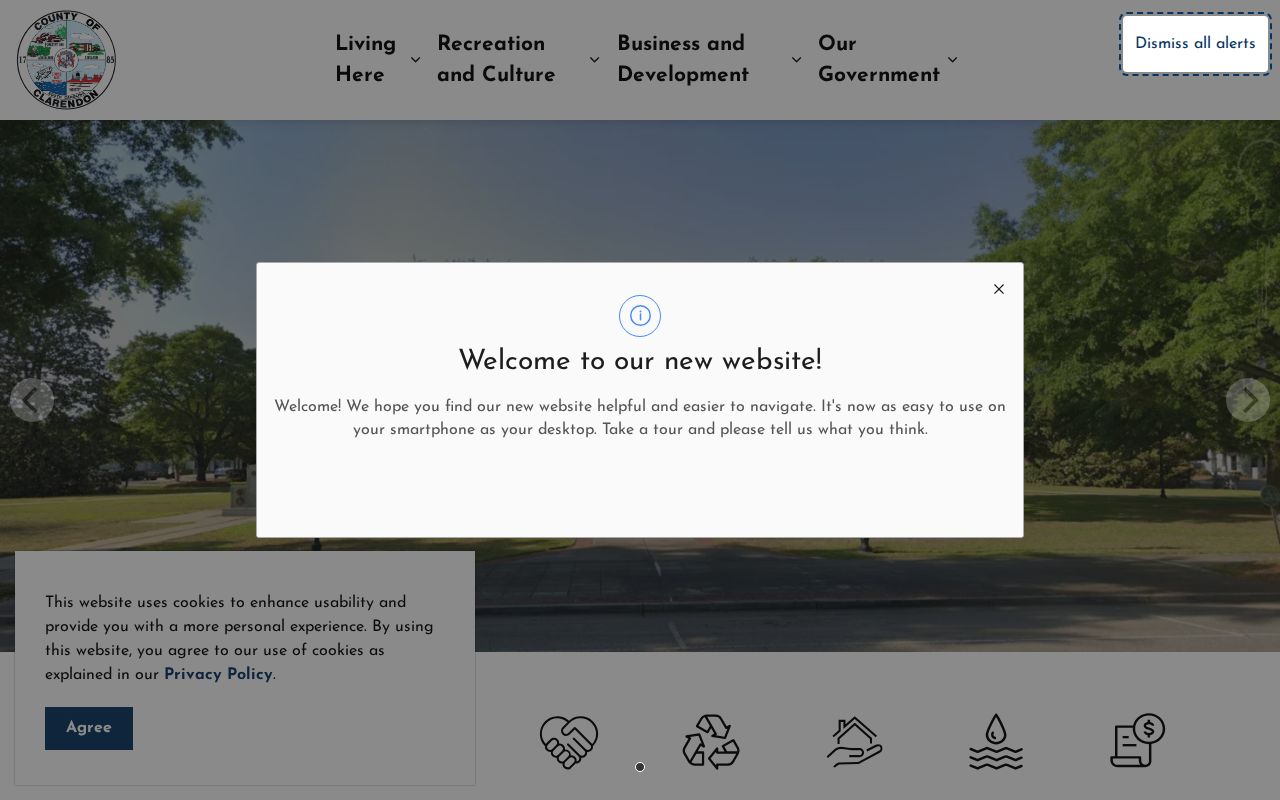
The county source helps route a reader to the office that owns the original record, while court and state searches answer narrower questions.
| Question | First source | What it proves |
|---|---|---|
| Is someone in local custody? | Detention booking lines | Current booking or release information |
| What happened in court? | Public Index and Clerk | Filed events and final disposition |
| What fingerprint-supported history is in South Carolina? | SLED CATCH | Repository record within stated limits |
Official South Carolina Background Checks
The South Carolina Law Enforcement Division, Criminal Justice Information Services, maintains the state Computerized Criminal History repository. SLED CATCH sells public name-based reports drawn from South Carolina arrest and conviction information supported by fingerprints. It does not provide wanted-person information, a sex-offender search, or a national check. The regular report costs $25. The online service fee is $1.43 as of July 2026, while a mail request avoids that online fee. Qualifying charitable organizations have a separate $8 route plus a $1.14 online fee.
SLED offers fingerprint checks only where a law authorizes or requires them. The responsible program gives capture instructions, and no general-public Clarendon County walk-in site was verified. A person reviewing a federal identity record uses the FBI Identity History Summary process, not CATCH. Each official product has a defined scope, so choose it by the record needed.
| Product | Base fee | Scope |
|---|---|---|
| CATCH online report | $25 plus $1.43 service fee | South Carolina fingerprint-supported name check |
| CATCH mail report | $25 | Same state product without online convenience fee |
| Qualifying charitable report | $8 plus $1.14 online | Restricted eligibility route |
Search Clarendon Records in CATCH
CATCH asks for a last name and first initial, with optional first-name letters, middle initial, maiden name, and date of birth. Its matching logic is broad. Names work as starts-with searches, and partial birth dates can widen a result. Guest access is available, so an account is not required for a routine public request. The report is available for only a limited period after purchase, and browser pop-ups may need to be allowed.
The CATCH user-type screen separates guest, account, and qualifying routes.
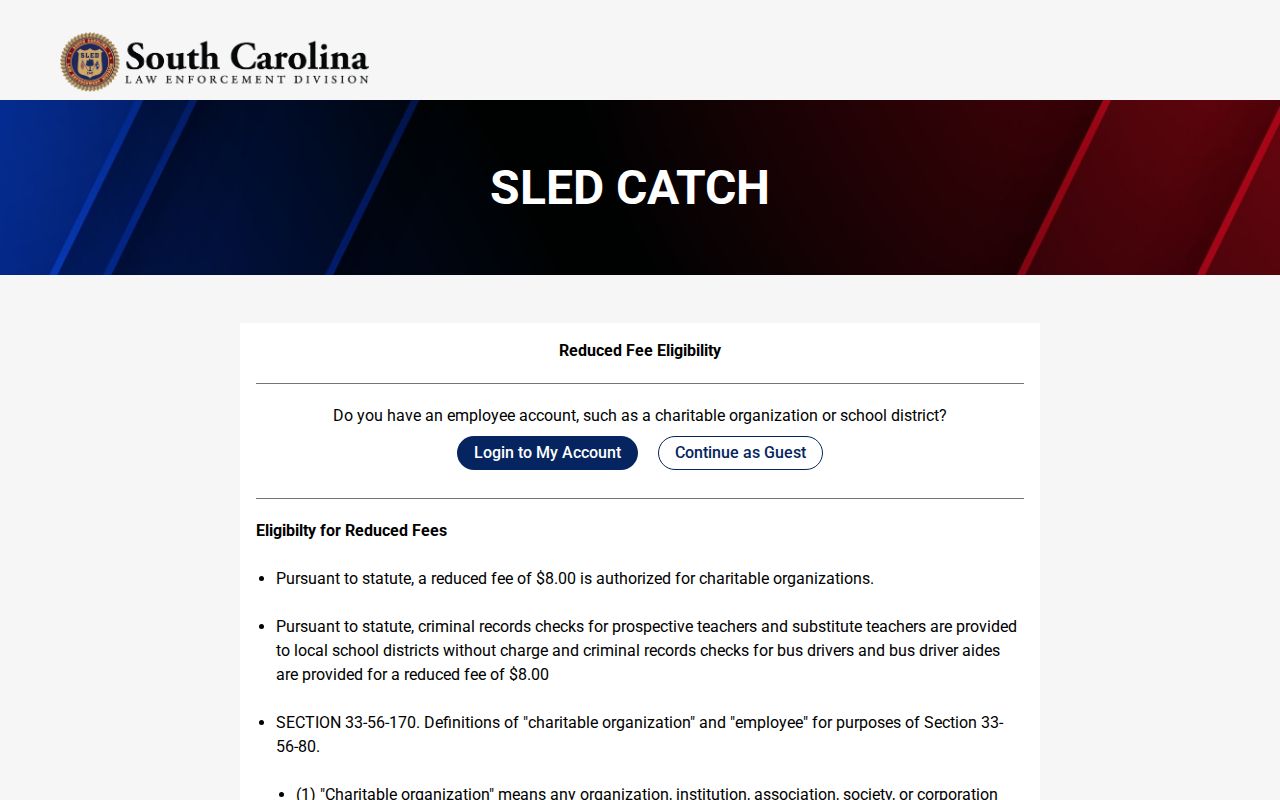
Pick the route that fits the request, then preserve the receipt and report before the download window ends.
| Field | Use | Search note |
|---|---|---|
| Last name | Required core field | Starts-with matching |
| First initial | Required core field | Broadens name route |
| First name or middle initial | Optional narrowing | Use known spellings |
| Date of birth | Optional identity check | Partial dates can widen results |
Types of Criminal Records
Clarendon County criminal records are separate because each office records a different act. Police and deputies describe incidents and arrests. Detention staff record intake, custody, bond documents, and release. Municipal, magistrate, and General Sessions courts record filed charges and outcomes. SLED collects fingerprint-supported state history. SCDPPPS reports active community supervision, while SCDC identifies people serving state prison sentences.
Warrants need special care. No official comprehensive Clarendon County warrant search was found, and CATCH expressly excludes wanted-person data. Check the issuing court and Sheriff, or ask counsel to verify an active matter. A public docket may give clues, but it can lag and may omit an unserved or sealed warrant.
- Incident and arrest reports: held by the Sheriff or city police agency that created them.
- Booking records: held by Clarendon County Detention Center.
- Court files: held by the relevant clerk and often indexed online.
- State history: maintained by SLED from qualifying submissions.
- Custody and supervision: split among county detention, SCDC, and SCDPPPS.
Clarendon Booking Without a Roster
Clarendon County does not publish a verified official name-search jail roster. For recent custody, call booking and release at 803-435-8831 or 803-435-0697. Administrative Services and Records can be reached at 803-433-3129 for a focused request. Ask the arresting agency separately for the narrative because the detention center did not write it. The county center creates intake, fingerprint, photo, property, classification, bond-tracking, and release records.
Booking is a process, not a verdict. Staff confirm the authority to hold, inventory property, perform identity and warrant checks, photograph and fingerprint the person, screen for health and risk needs, and assign housing. A person held beyond 14 days receives a more detailed health appraisal. Release can wait on complete court authority, victim notice, detainer checks, or missing criminal-history information. A national check before release can reveal another jurisdiction's hold.
The SLED criminal-history lifecycle update documents why fingerprints affect record completeness.
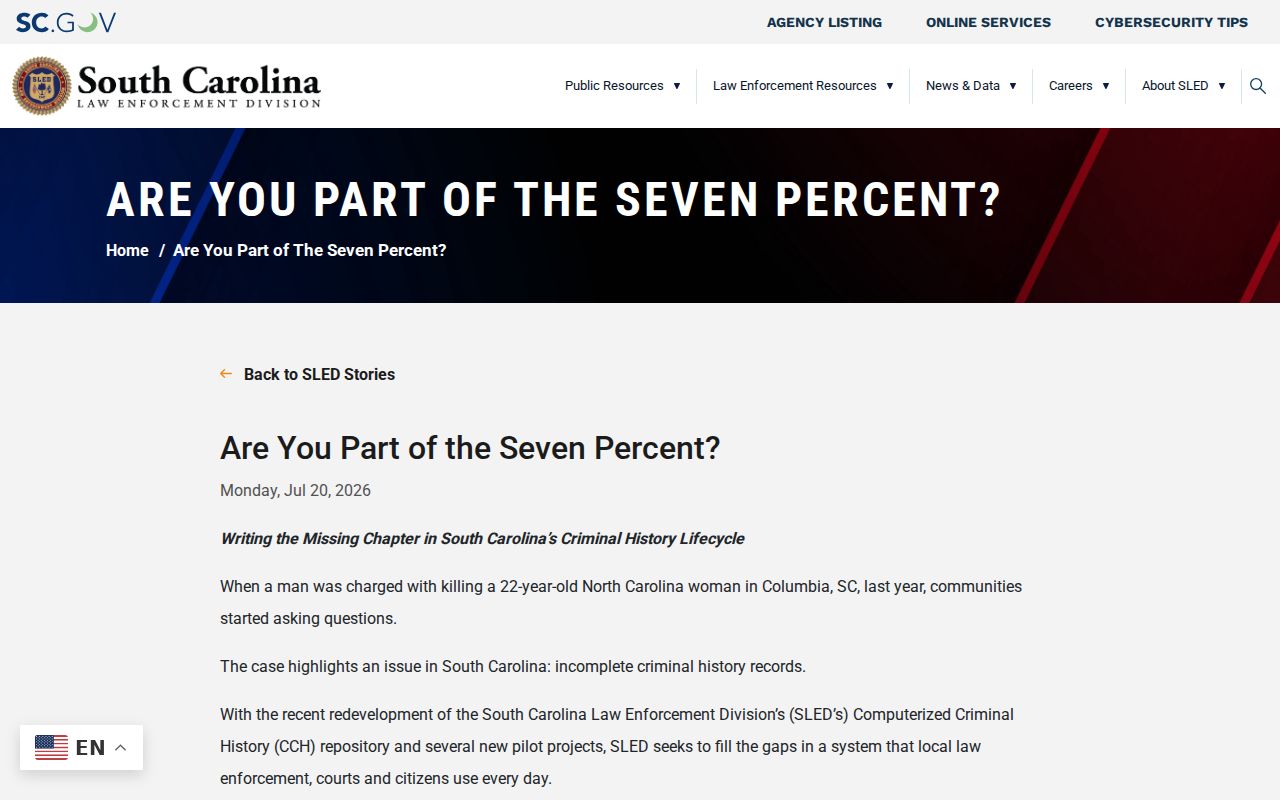
That state warning helps explain why a local booking, court filing, and CATCH result may not align at once.
What a Clarendon County Criminal Record Shows
A Clarendon County Public Index file can show party names, case and indictment numbers, filing dates, charges, statute references, bond events, counsel, docket entries, disposition, and sentence data. SLED CATCH instead groups fingerprint-supported arrest cycles and outcomes. Neither should be read without context. Initial arrest charges can change, a prosecutor may file a different count, and a final court order is the best source for the outcome.
| Name & Identifiers | Party name, aliases where recorded, date of birth or agency identifiers within access limits. |
|---|---|
| Arrest / Booking Data | Agency, intake date, charge authority, fingerprints, and release information. |
| Charges & Statutes | Filed counts, offense descriptions, and South Carolina code references. |
| Disposition | Dismissal, nolle prosequi, plea, verdict, or other final result. |
| Sentence | Custody, fine, probation, credit, and special terms shown in the court file. |
| Custody / Supervision Status | Current county custody, state incarceration, or community supervision from the proper agency. |
Fix a Clarendon Disposition Gap
A dismissed Clarendon County charge can remain in CATCH when the court outcome has not been linked or an eligible expungement has not been completed. First obtain the final disposition from the court that handled the case. Compare names, case numbers, charge dates, and statutes with the SLED entry. If the court record is right but CATCH is not, use the SLED CJIS correction route and provide the supporting disposition. If the court file itself is wrong, begin with that clerk.
The SLED CJIS repository page explains the state record function and correction topics.
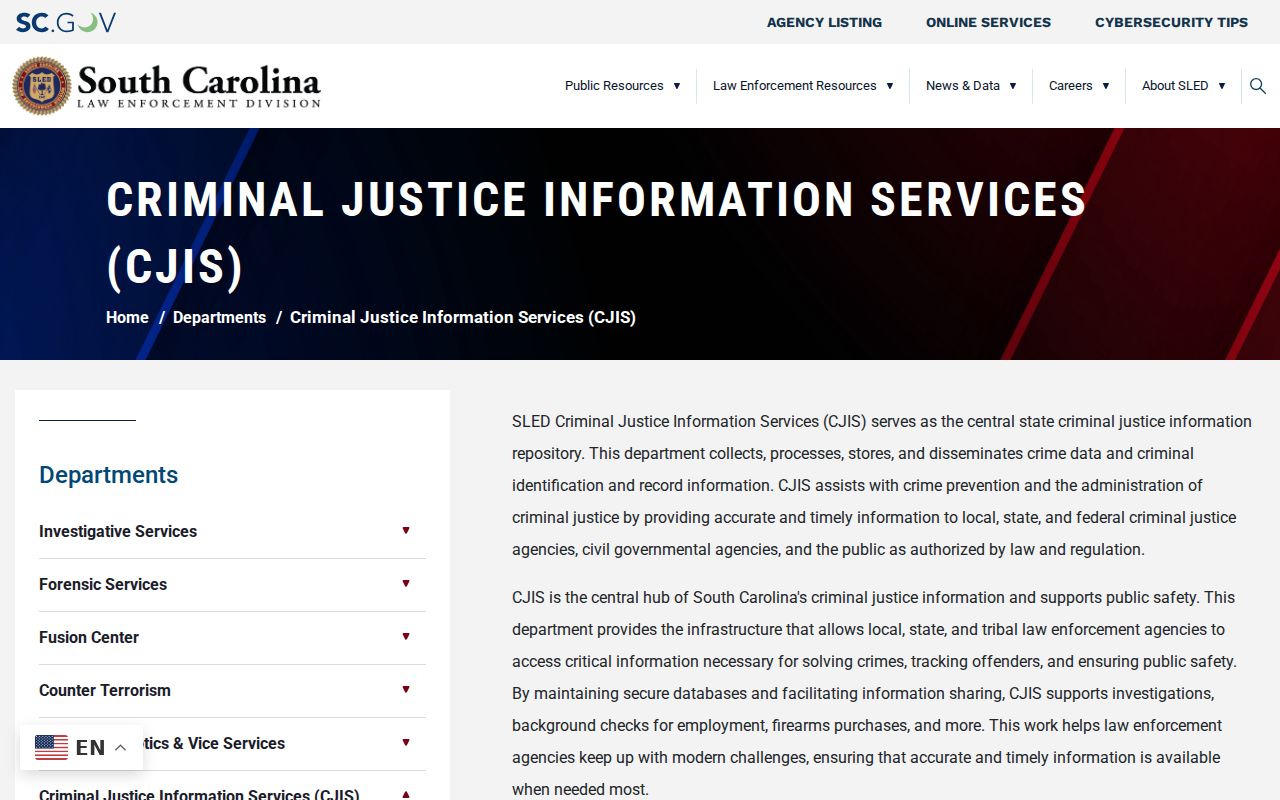
Keep copies of the court order and all correction correspondence so the record trail can be checked again after processing.
- Disposition
- The court's result for a charge.
- Nolle prosequi
- A prosecutor's formal decision not to continue that charge at that time.
- Direct indictment
- A charge presented through indictment without the usual fingerprint event, which can create a repository gap.
Public Access Laws
The South Carolina Freedom of Information Act provides the framework for requesting public records, but it does not make every detail public. Active-investigation material, juvenile records, protected victim data, medical information, personal identifiers, and security-sensitive details may be withheld or redacted. Judicial files also follow court access rules. Ask for a specific record and date range, then let the lawful custodian identify any exemption rather than demanding an unrestricted file.
Key Statutes:
South Carolina Code Title 30, Chapter 4 sets public-record request duties, timing, fees, and exemptions.
South Carolina Code Title 23, Chapter 3 governs criminal records, fingerprints, and registry functions.
South Carolina Code Title 17, Chapter 1 includes arrest-record destruction and expungement provisions.
South Carolina Code Title 22, Chapter 5 includes magistrate criminal procedure and eligible expungements.
The South Carolina FOIA text is the primary source for the public access framework.
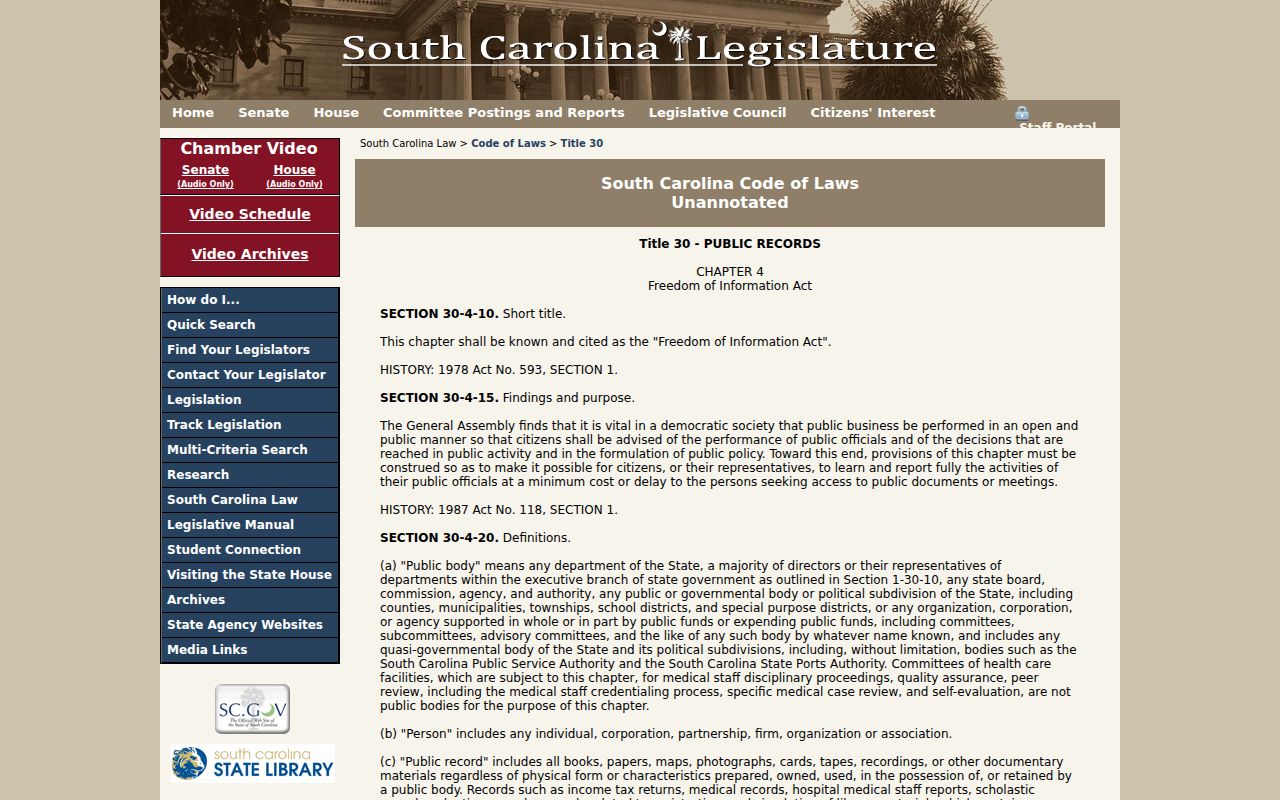
The statute should be read with any court rule or record-specific protection that applies to the requested material.
Clarendon County FOIA Timing
A written Clarendon County request should name the agency, record type, incident or case number if known, approximate dates, location, requested format, and requester contact details. County administration may route records in its custody, but records held by an elected Sheriff or Clerk may need to go directly to that official. The initial determination is generally due within ten business days for records no more than 24 months old and twenty business days for older material. That reply is not always the record itself.
After any required deposit, production is ordinarily due within 30 calendar days for newer records or 35 for older ones. Reasonable search, retrieval, redaction, and copy charges may apply, based on the lowest-paid qualified employee. A deposit of up to 25 percent may be requested. Current Clarendon copy and certification amounts were not found, so ask for an itemized estimate before sending payment.
Sealed, Expunged & Restricted
South Carolina expungement ordinarily uses an Order for Destruction of Arrest Records. It is not automatic for every dismissal or conviction. Eligible General Sessions matters usually begin with the Third Circuit Solicitor, while qualifying magistrate or municipal dismissals are handled through the court that disposed of the case. Juvenile records follow separate limits. A pardon from the South Carolina Board of Paroles and Pardons is different because it does not erase the record.
After an order, verify each affected system. Check the court index, then SLED CATCH and the originating arrest agency as appropriate. Processing can take time, and one office may update before another. Keep a certified order. Restricted or sealed records may remain available to agencies that have authority under law even when they no longer appear in a public name search.
The South Carolina arrest-record destruction law supplies the legal source for several expungement routes.
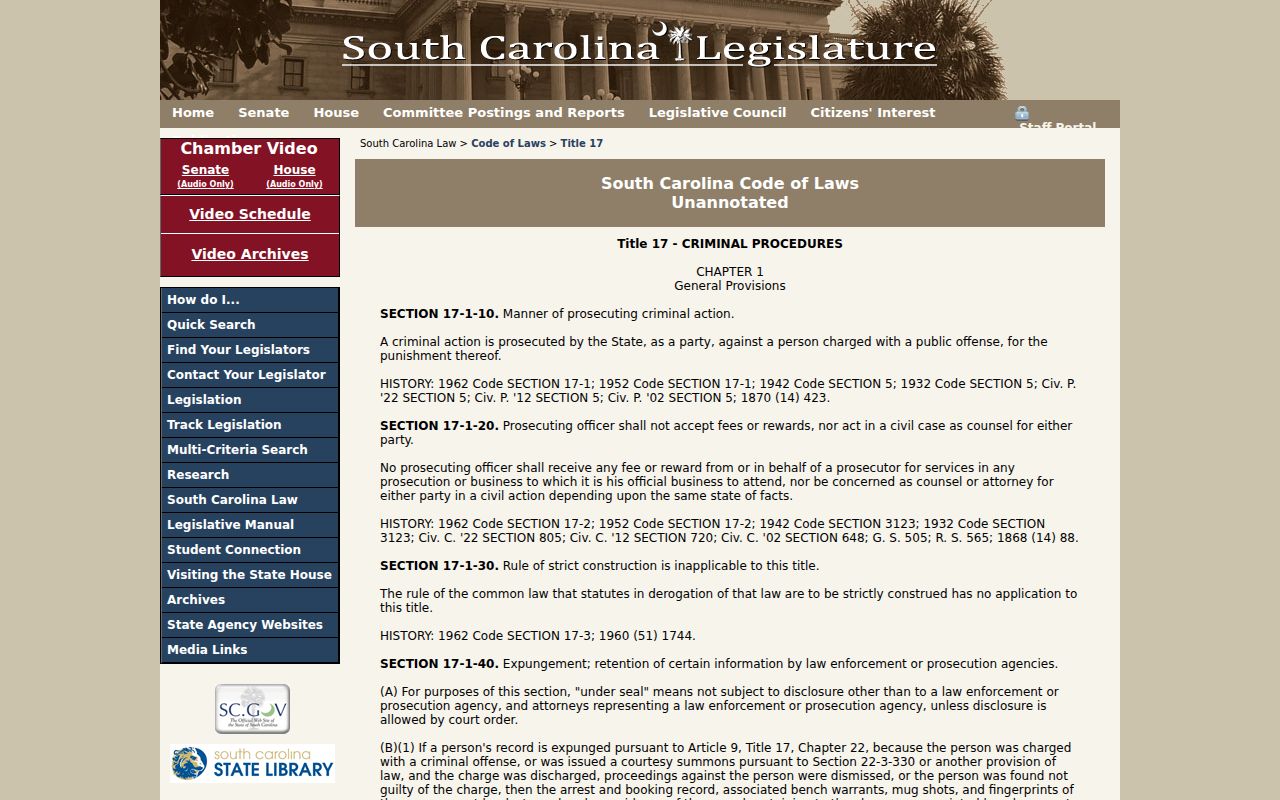
The order and eligibility rules must be matched to the court and charge rather than inferred from a blank search result.
Verify a Clarendon County Warrant
A warrant will not appear in SLED CATCH. No complete official Clarendon County active-warrant website was verified. Identify the issuing level first. A Manning, Summerton, or Turbeville municipal matter belongs with that city court. Magistrate matters go to Magistrate Court. General Sessions questions belong with the Clerk and may leave entries in Public Index. The Sheriff may hold execution information, but an online case entry is not a real-time warrant check.
Call the court and Sheriff, or ask counsel to verify the warrant before appearing. Confirm whether it is active, how it can be resolved, which payment or bond methods are accepted, and whether surrender is required. Obtain written proof when it is cleared and check again after processing. The Detention Center warns that another jurisdiction's warrant or detainer can delay release even after local bond issues are addressed.
Clarendon Custody Search Routes
Use the Clarendon Detention Center for county pretrial custody. Use SCDC Inmate Search for people currently sentenced to and held by the South Carolina Department of Corrections, based on the previous midnight. Use SCDPPPS Offender Search for many people under current state community supervision. A person can move from one system to another, and old custody may no longer appear in the live locator.
SC SAVIN provides free, 24-hour English and Spanish custody notifications through the state toll-free line. It can alert registered victims about transfers and release across detention centers, SCDC, and SCDPPPS. Court records remain the source for the sentence itself. The locator is operational status, not a substitute for the sentencing order.
Criminal Records by City in Clarendon County
Manning, Summerton, and Turbeville maintain distinct police and municipal-court channels. City police reports remain with the city that created them, even when a person later enters Clarendon County detention. Municipal cases may appear in Public Index, but coverage varies. Call the local court when a citation, warrant, or lower-level case is absent. County General Sessions files still belong with the Clarendon County Clerk.
Manning Criminal History
County seat · Police reports and Municipal Court use separate West Boyce Street contacts.
Summerton Criminal History
Municipal records · The Main Street court is the fallback when a city case is not online.
Turbeville Criminal History
Four custodians · Town, county, court, and state prison records answer different questions.
Clarendon Fingerprint Gaps Explained
SLED said in July 2026 that only seven percent of direct indictments from 2025 through the update date had entered the criminal-history repository. Direct indictments and changed charges can miss the fingerprint transaction that ties a prosecution to the state record. A CATCH no-result therefore does not establish that no Clarendon County case exists. Search Public Index and contact the Clerk when facts point to a prosecution.
The South Carolina fingerprint and criminal-record statutes describe the state submission framework.
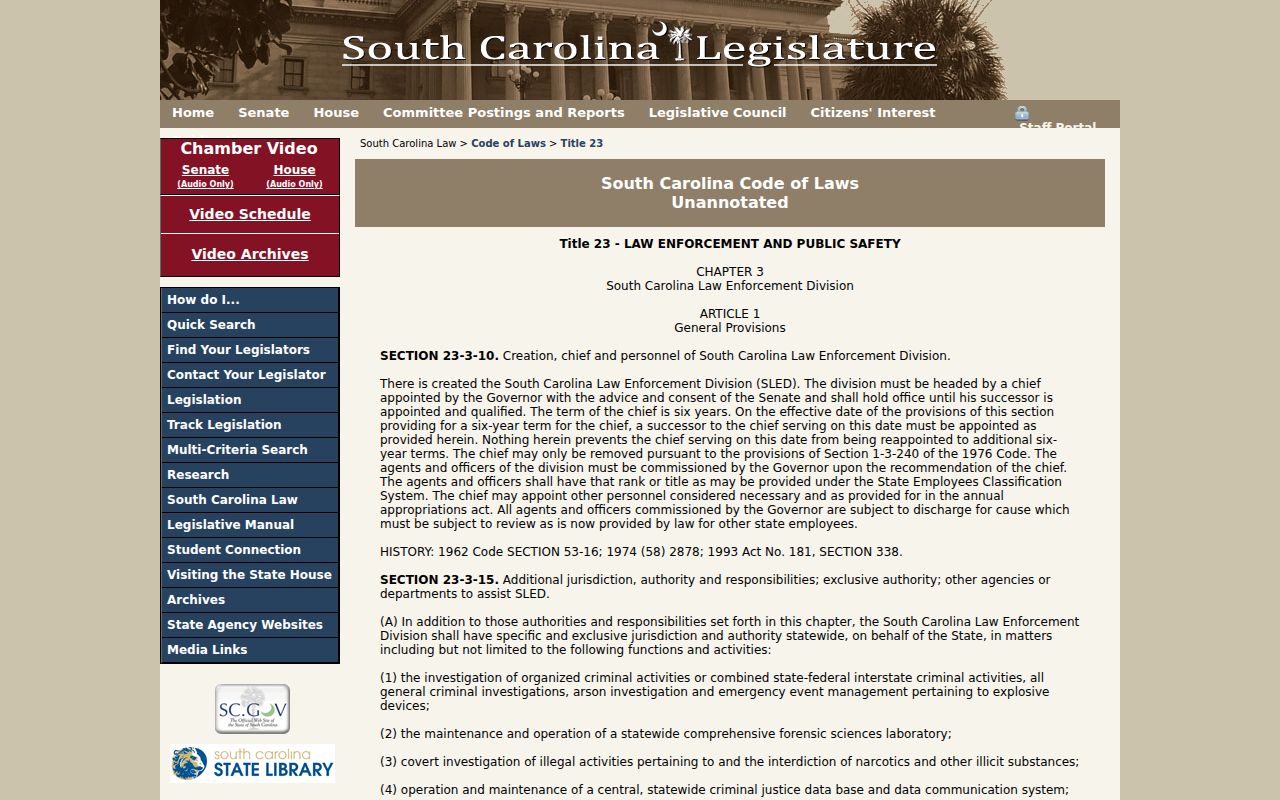
The law and SLED's lifecycle warning together show why identity, fingerprints, filed charges, and disposition must be checked as a chain.
Clarendon CATCH Scope Check
Before paying, confirm that a South Carolina name-based repository report is the right product. It does not search federal records, other states, warrants, or the sex-offender registry. It can show eligible South Carolina arrest and conviction data supported by fingerprints. For a known Clarendon County prosecution, the court file may provide the clearest result. For an active local booking, the detention phone lines are more current.
The official CATCH portal posts the current price, terms, and report limits.
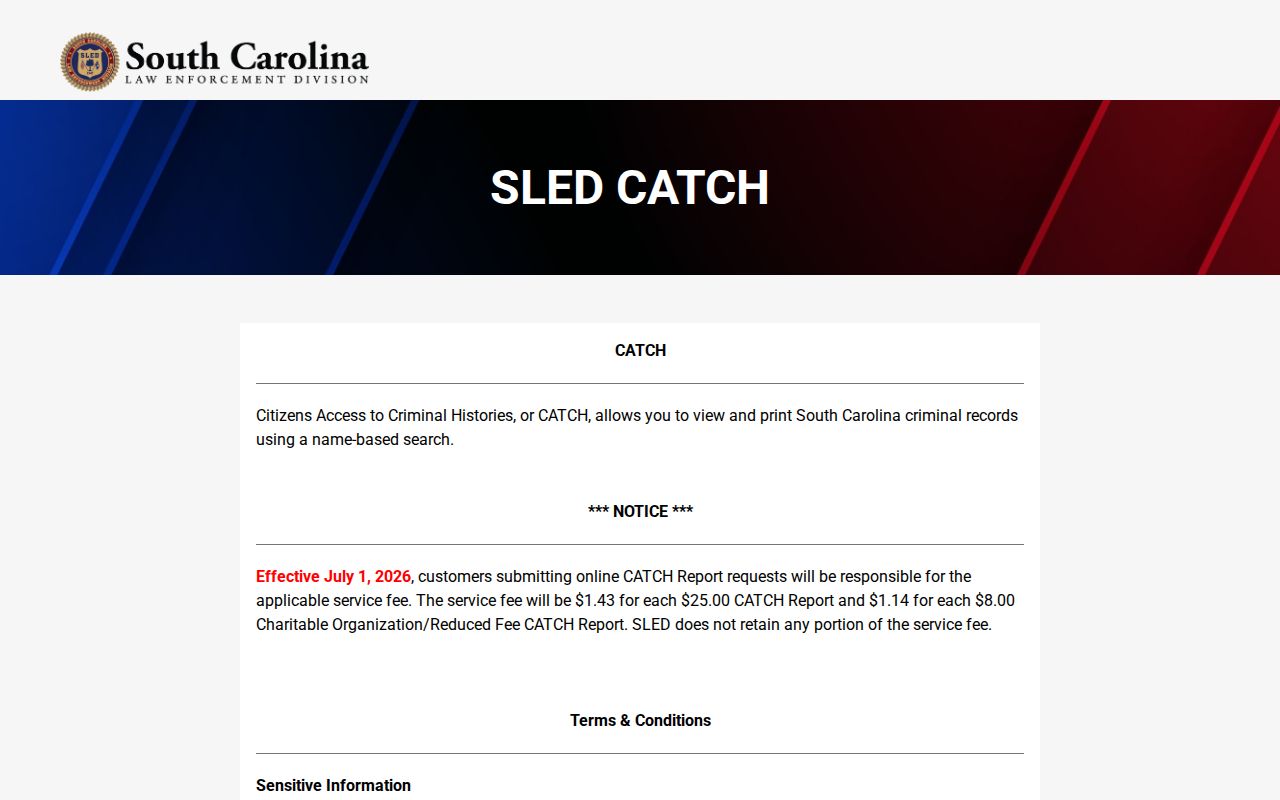
Read those terms on each visit because service charges and portal behavior can change.